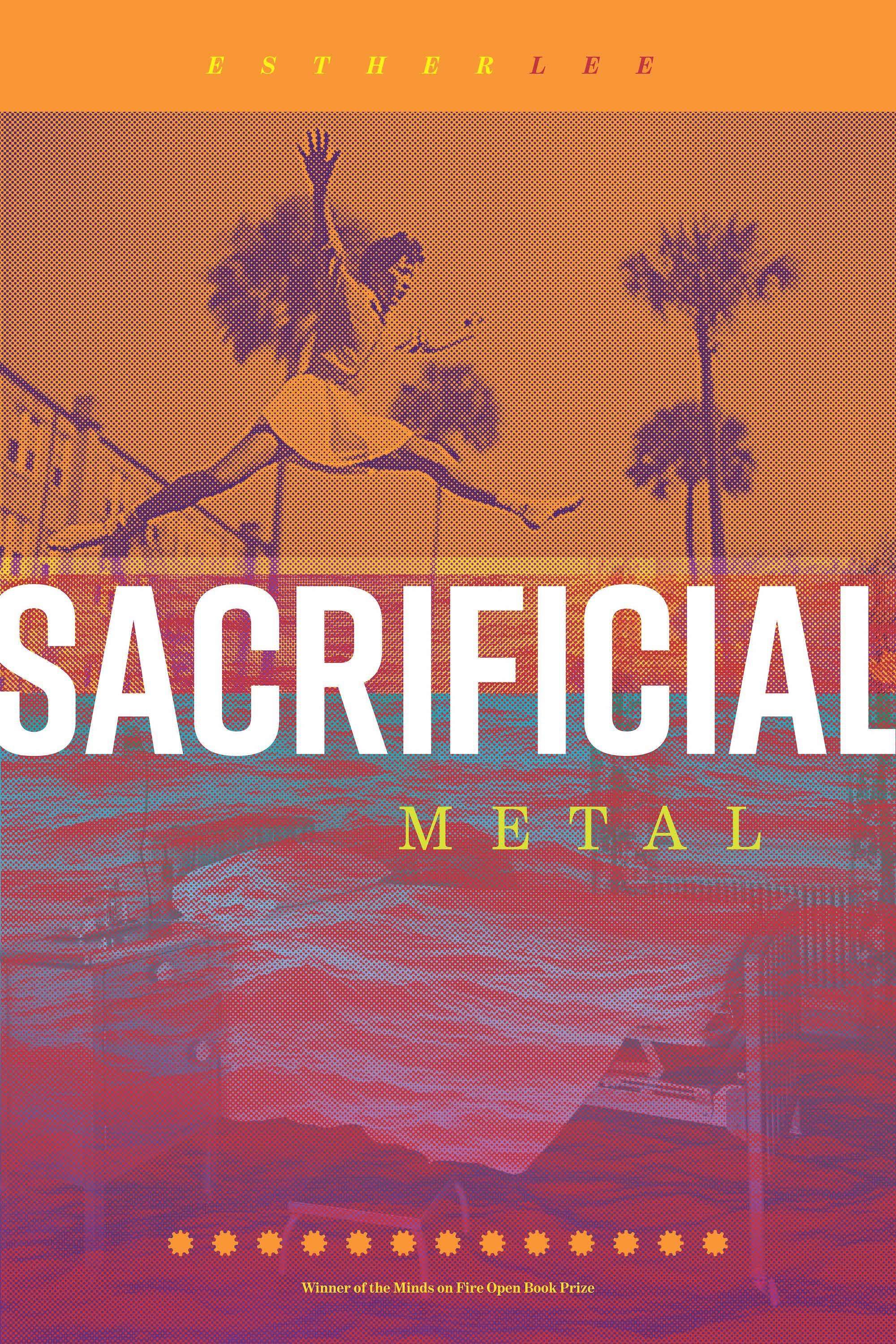
Sacrificial Metal
I see Sacrificial Metal as a collection of letters to the self as though the self were a familiar stranger who speaks all the same languages, and happens to also be a scientist interested in the nature of time. This is a correspondence in which the world, and a person's understanding of its many forms of data, is rigorously contemplated and recorded. “Where am I in your body now?,” asks a poem. It's a beautiful question, one that bears repeating. Esther Lee writes worthy poetry that reveals a keen mind, as well as a spirit that is as intelligent as it is compassionate.
—Tarfia Faizullah, author of Seam and Registers of Illuminated Villages
In Sacrificial Metal, Esther Lee dances with astute curiosity and deep tenderness across the shifting grounds of grief, touch, bearing witness, memory, and our obstinate human instinct for future-planning. With great compassion, Lee's poems remind us that everything human eventually unravels, but her poems remind us too that joy is "like tragedy, it occurs--undeniably, relentlessly--every day.” Every breath, every dusk, every dinner, every doctor's visit is at once both "tourniquet and artery” --just one of many gorgeous truths revealed in these pages.
— Sean Dorsey, choreographer, dancer, writer and trans-justice activist
In her second poetry collection Sacrificial Metal, Esther Lee’s poems offer a meditation through the lens of dance and human movement about the quiet dignities and alienation of illness, caregiving, and living in a racialized body. Part documentary poetics, part mourning diary, part textual choreography, and part nautical-inspired elegy, the poems in Sacrificial Metal serve as inquiries about how we may become socialized or exiled from a community, along with how movement and dance offer possibilities of interconnectedness with one’s own body and a sense of collective identity.
Minds on Fire Open Book Prize
Pushcart Prize nomination
Florida Book Award
National Poetry Series Finalist
Alice James Books/Kundiman Prize Finalist
Pleaides Press Editors’ Prize Finalist
Spit
Esther Lee's Spit shines. Filled with bravado and brilliance, Lee's debut fills in the blanks it makes profound use of, hollering across the "rusted hollows." Utilizing a host of forms, from montage to prose poems, "Interviews with My [C]orean Father" to fractured sonnets. Lee echoes and evokes a multitude of identities: writer, sister, "good girl," lover. If this is the future of American poetry, as it appears to be, we are in good hands.
—Kevin Young, author and poetry editor of The New Yorker
Spit, Esther Lee's debut collection of poems, interrogates the many tenuous connections that get forged....Here are visceral poems in which gardens are watered with urine, family members are marked by each others' "spit and fingernails," where love is tempered with violence. Still, the violence of the family life is a reflection of the ironic violence of the [C]orean immigrant experience in America, one in which its participants must leave one politically disrupted culture to join the other that helped to destroy it: a process that often historically negates the pain [C]orean individuals have had to endure in order to preserve the American "melting pot" mythology. Fresh and brutal, serious and comic, Spit is a deeply heartfelt examination of family, language, and personal connection in this multi-ethnic, multi-historied America. "Convert me please," Lee writes. Converted.
—Paisley Rekdal, Guggenheim Fellow and author of nonfiction and poetry
Esther Lee's poems are calling out to the other in her wild quest to find herself. In letters, interviews and prayers she asks, pleads, demands recognition because she is the "good girl fight[ing] a medium-sized meteor," and the thing is hurling through space and aimed at her heart. In lines of breathtaking dexterity she juggles images and language itself like a romantic master. Her questions are plainspoken and elegant, straight-edged and rococo, high-minded and hilarious. Oh, the worlds that swirl in the brain of this poet, and we are lucky enough to be on the odyssey with her. .
—Barbara Hamby, Guggenheim Fellow and author of eight poetry collections
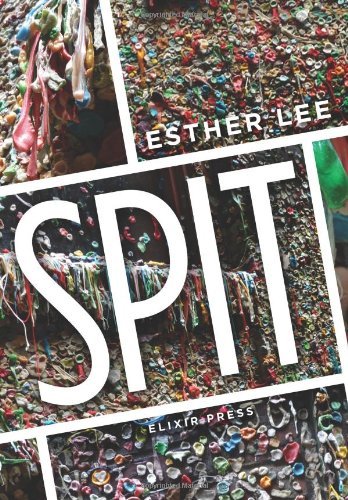
Winner of the Elixir Press Poetry Awards
Nominated for the PEN Open Book Award and Asian American Literary Awards
Nominated for two Pushcart Prizes
Elinor Benedict Poetry Prize
Longlisted for the “Discovery”/ The Nation Award
Lena-Miles Wever Todd Poetry Prize finalist
Blank Missives
Esther Lee’s surreal and hollowed fragments invoke the terror of speaking to the missing, likely to the dead. My reaction, first reading them on the page, was horror followed by grief. Her phantom speaker...is at turns coy, erotic, and soulful.
—David J. Daniels, author of Clean, Four Way Books Intro Prize in Poetry, and contributing editor, Born Magazine
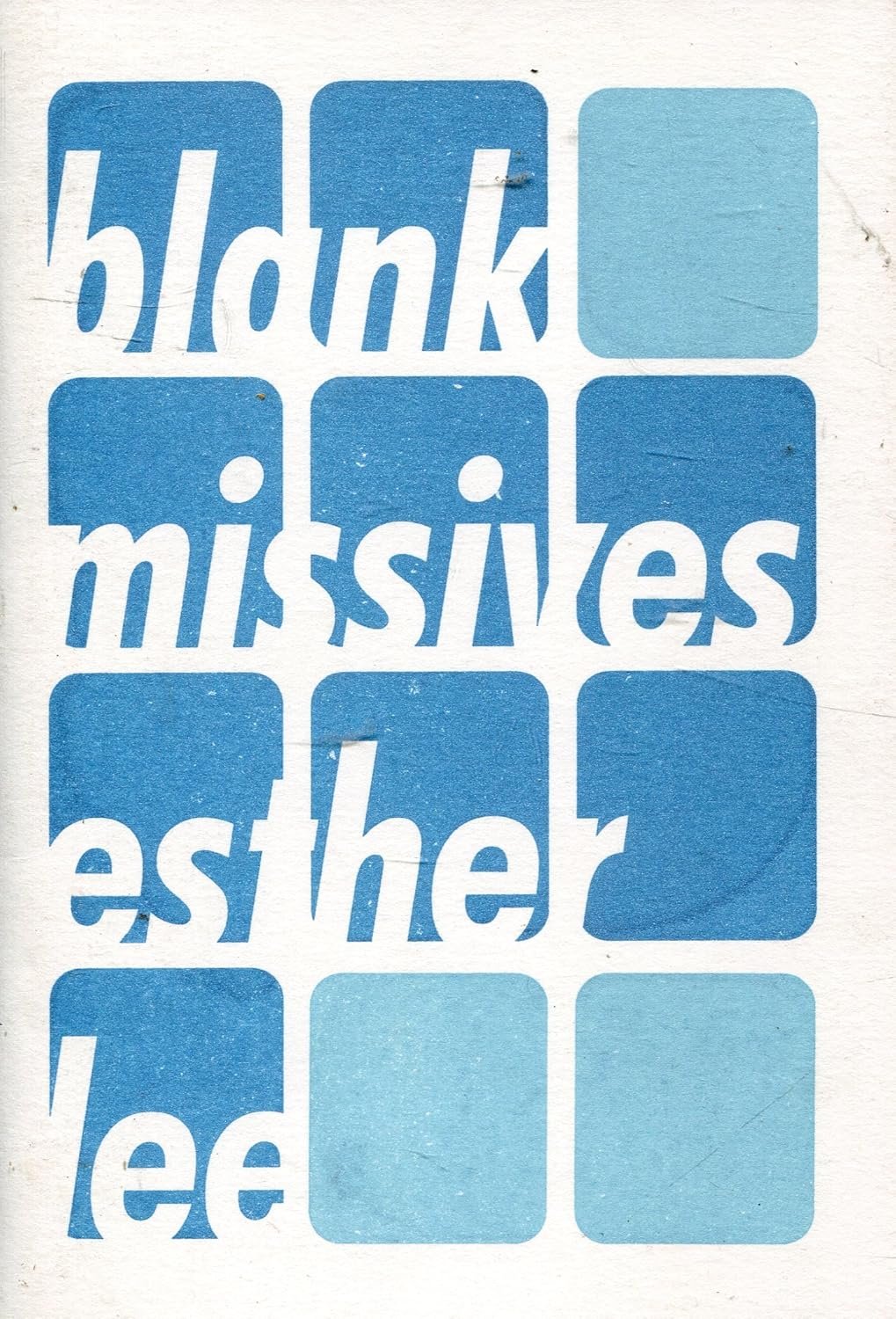
Published by Trafficker Press
Individual poems and reprints published by Ploughshares, 字花 Journal (fleursdeslettres.com), La Fovea, FOURSQUARE, Tea Salon, Cream City Review, Five Fingers Review, Sonora Review, Born Magazine
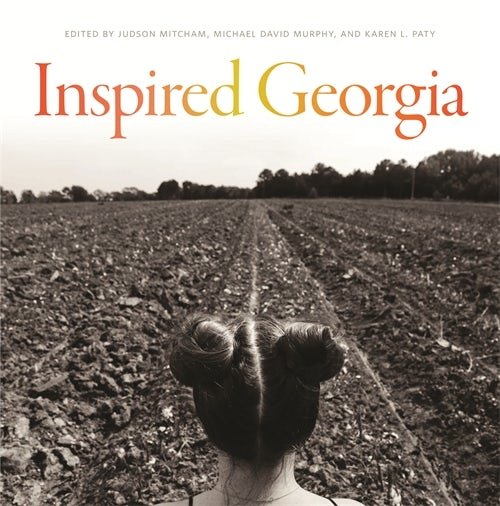
Inspired Georgia
“25 Books All Georgians Should Read,” Georgia Center for the Book (2017) - Winner
An anthology of poems and photographs by Georgia poets and photographers published by the University of Georgia Press.
Inspired Georgia is a unique collection of Georgia’s contemporary poets and photographers that engages the history and culture of the state, while serving as a document of some of the best and most powerful pieces penned by Georgia poets and images shot by Georgia photographers in recent years. Representing a wide range of styles, attitudes, and backgrounds, the poets either hail from Georgia or have spent a considerable amount of time in their adopted state. Chosen from previously published collections, representing various stages of the poets’ careers, these poems exemplify the great talent, insight, and creativity present in Georgia letters.
A geographically diverse representation of Georgia photographers is included, showcasing a wide range of talent well versed in making insightful and intimate images. The interweaving of photographs with poems (and poems with photographs) creates spaces of possibility, where what’s in the mind’s eye might (or might not) meet what’s found in front of the camera’s lens.
While complementary, the poems and photographs in Inspired Georgia are not in dialogue with each other—they echo, resonate, and reflect the places they inhabit. They pay homage to the ecology, terrain, and culture of Georgia, which in turn draws in, nurtures, and fuels the intellect of its many and varied artists.
—Edited by Judson Mitcham, Michael David Murphy, and Karen L. Paty
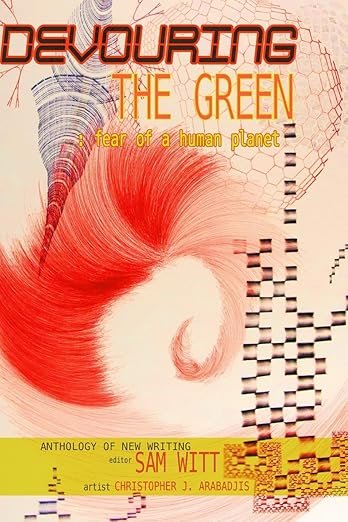
Devouring the Green
An eco poetry anthology
—Edited by Sam Witt and art by Christopher Arabadjis, Jaded Ibis Press
What a harrowing and ultimately energizing anthology Sam Witt has created in Devouring the Green. Here, the human merges with the cyborg or, in moments that seem both Whitmanian and darkly fabulist, all of us merge uncomfortably with the natural world we are, simultaneously, destroying. “Would you call humans an invasive species?” Witt asks in one of his many prompts that inspired the poets in this collection. “Are the dead an invasive species?” Wild, visionary, and cacophonous, these poems work to position our selves anew and, so, ask us to think about our responsibilities to others and to our environment in radical, discomforting ways.
— Kevin Prufer, poet, editor, and creative writing professor at the Univ. of Houston
Organized around a series of questions drawing attention to how the 21st century has complicated our experiences of nature, the body, and human activity, Devouring the Green pushes an exciting range of contemporary poets to resist nostalgic, simplified notions of our human place in the world and, rather, to focus unflinchingly on the many ways we entangle with—and, by our presence, irrevocably change—the world around us. The poems gathered here are alternately visionary, wry, celebratory, angry, elegiac, and apocalyptic—dizzyingly broad in their scope and, above all else, timely. This is a wonderfully unique, ambitious, and challenging anthology.
—Wayne Miller, poet & editor, The City, Our City and Literary Publishing in the 21st Century